waterway · Erie County
Times Beach Confined Disposal Site
Buffalo
Former confined disposal area used from 1972 to 1976 for contaminated sediment dredged from the Buffalo River federal navigation channel. The 45-acre containment site later became a nature preserve; habitat restoration and invasive-species work continue around the contained dredged material.
The documented story
What happened here?
Times Beach is a 45-acre confined disposal facility built by the U.S. Army Corps of Engineers at the mouth of the Buffalo River. From 1972 to 1976 it received sediment dredged from the river's federal navigation channel, physically linking the property to the working harbor's industrial and maintenance history.
The Corps moved dredged-material placement to another facility in 1976. Vegetation then colonized the closed surface, creating an unusual succession from engineered disposal cell to urban habitat rather than a conventional excavation-and-redevelopment cleanup.
Later habitat programs focused on invasive-plant control and ecological restoration while respecting the containment structure. Wildlife value and public interest do not mean the dredged sediment was removed or that every part of the site can be disturbed safely.
Homes, dredged sediment, birds, and a human-made wetland
Times Beach became a preserve because people argued for its living value
45 acresapproximate confined-disposal and preserve area
Earlier twentieth century
A small waterfront community preceded the disposal facility
Archival and county histories describe cottages, restaurants, and a shantytown-like settlement at Times Beach. Harbor expansion and changing shoreline uses eventually displaced that lived waterfront landscape.
1972-1976
The Army Corps placed navigation-channel sediment behind containment dikes
The facility received dredged material from the Buffalo River federal navigation channel for four years. Disposal then moved elsewhere, leaving an engineered landform containing sediment from the river's heavily industrial period.
After disposal
Natural succession and public advocacy changed the proposed future
Plants, birds, and other wildlife occupied the closed surface. The Buffalo Ornithological Society and others urged preservation, and the property developed into a public nature preserve where habitat work and access must remain compatible with containment.
News record
Major news events
Coverage selected here marks a turning point in public awareness, policy, enforcement, employment, or cleanup. Links open at the original publisher or archive; WNYAtlas does not reproduce restricted articles or images.
Buffalo River dredged sediment forms a new engineered shoreline landscape
The confined disposal facility received navigation-channel sediment during the river's heavily industrial era, then closed when placement shifted elsewhere.
U.S. Army Corps of Engineers ↗Plants, birds, and public advocacy transform the closed disposal cell
Natural succession and later habitat work created ecological value above contained dredged material, producing a preserve whose living landscape remains inseparable from its engineered foundation.
U.S. Army Corps of Engineers ↗Inspection and repair funding expose the preserve's engineered obligation
Army Corps teams documented wind- and wave-damaged containment features, and federal infrastructure funding later included dike-wall repair—evidence that the nature preserve still depends on functioning disposal-site infrastructure.
U.S. Army Corps of Engineers, Buffalo District ↗Chronology
Timeline
- 1972–1976
Contaminated navigation-channel sediment was placed in the confined disposal area.
- 1976
The Corps shifted navigation-channel sediment placement to another facility, ending Times Beach's short active-disposal period.
- Post-disposal
Vegetation and wildlife colonized the closed containment surface through natural succession.
- Preserve era
Public agencies and partners managed the property for habitat while retaining its engineered containment function.
- 2012–2017
A five-year restoration demonstration cut and treated invasive plants, removed hundreds of tons of biomass, replanted native species, and monitored ecological response.
- 2020–2022
Army Corps inspections documented wind- and wave-damaged containment features, and federal infrastructure funding included major dike-wall repairs.
Environmental record
Documented impacts
- The site contains dredged sediment affected by the Buffalo River's industrial contaminant legacy.
- Constructed dikes and fill permanently altered former shoreline and wetland conditions.
- Disturbance or erosion could compromise isolation of the contained material.
Response
Cleanup and controls
- The confined disposal structure physically isolates dredged sediment.
- Habitat restoration and vegetation management improve surface ecological function without disturbing containment.
- Access, erosion, invasive species, and structural condition require continuing stewardship. Repairs to shoreline armor or dike components protect against release of the contained dredged material; they are not merely park landscaping.
Then and now
The site today
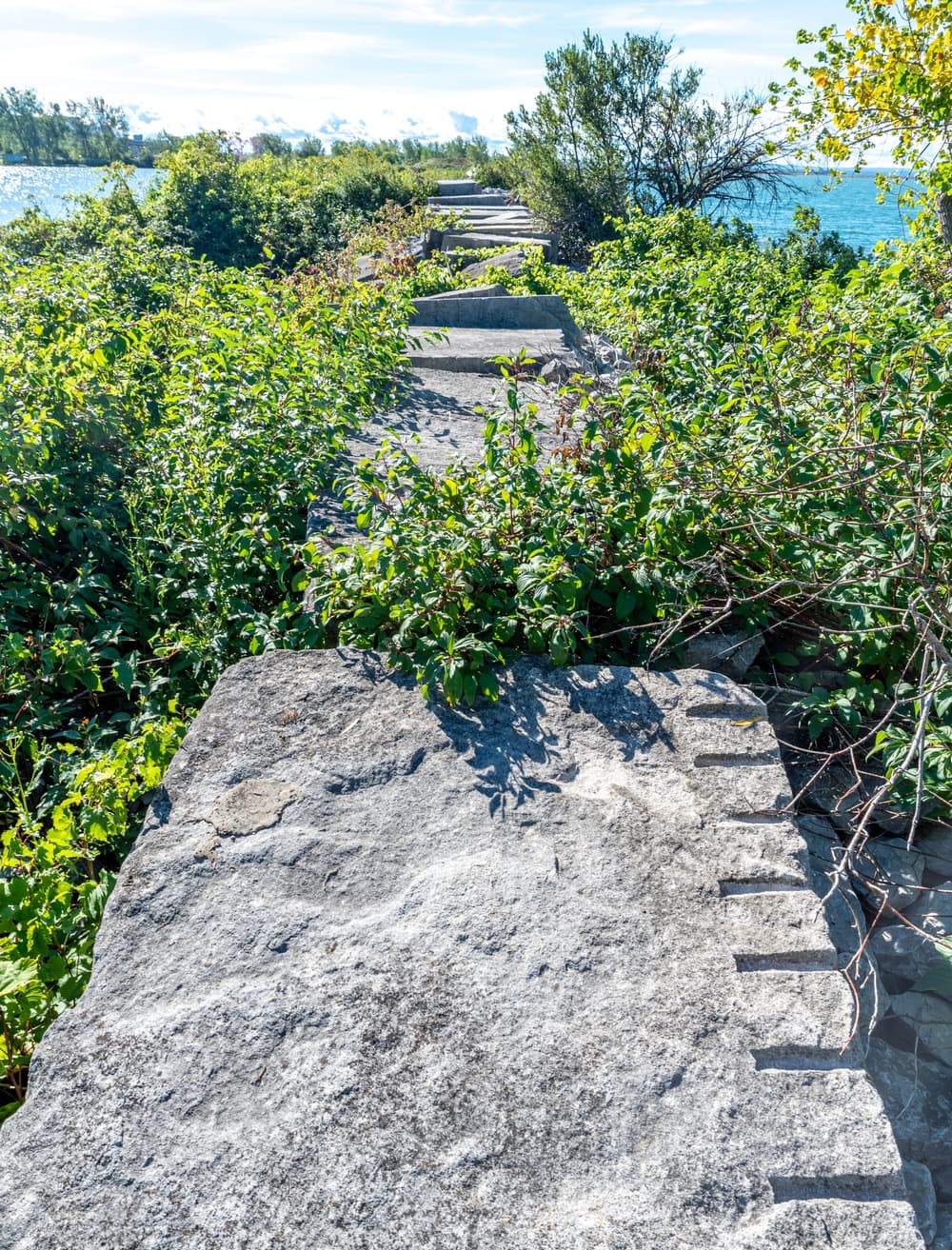
Times Beach is both an Army Corps-era disposal structure and a nature preserve. Those identities are compatible only while containment integrity, access, and habitat management are maintained.
Atlas connections
Connected places
These collections explain documented material, facility, waterway, ownership, or cleanup relationships. Inclusion does not imply that every place shares one contaminant source or plume.
Buffalo River industrial corridor
Industrial parcels, former disposal areas, sediment remedies, and restored habitats form a shared river corridor while retaining separate ownership and cleanup records.
The river is the organizing environmental system for this collection.
Chemical-manufacturing shorelineBuffalo ColorBuffalo Color represents a major industrial parcel with documented sewer and shoreline pathways.
Steel and coke landscapeRepublic SteelThe former Republic Steel landscape links heavy industry, managed brownfields, and riverfront redevelopment.
Former industrial propertyIroquois Gas / Westwood PharmaceuticalThis property adds a distinct industrial and cleanup history within the broader river corridor.
Peninsula cleanup areaKatherine Street PeninsulaThe peninsula record connects upland contamination, shoreline conditions, and river restoration.
Landfill and steel propertyAlltift Landfill / Ramco SteelAlltift links filled industrial land to the river corridor's disposal history.
Recovered landscapeTifft Nature PreserveTifft shows the corridor's transition from industrial and filled land to habitat and public use.
Confined-disposal and habitat siteTimes Beach Confined Disposal SiteTimes Beach connects dredged-material management with later habitat value.
Outer Harbor industrial recovery landscape
Canals, filled shoreline, disposal areas, steel and iron facilities, and restored habitat form a connected Outer Harbor landscape. Each location retains its own contamination record, remedy boundary, and present-day controls.
The canal and Ship Canal Commons preserve Hanna Furnace history while containing contaminated sediment and residual upland material.
Covered shoreline brownfieldOuter Harbor GreenbeltThe Greenbelt adds a separately managed filled shoreline and public-open-space remedy.
Dredged-material site and habitatTimes Beach Confined Disposal SiteTimes Beach shows another Outer Harbor transition from disposal infrastructure to ecological value.
Landfill and steel propertyAlltift Landfill / Ramco SteelAlltift connects historic filling and steel operations to the broader South Buffalo waterfront.
Adjacent steelmaking landscapeBethlehem SteelThe former Bethlehem complex extends the heavy-industrial shoreline south into Lackawanna.