industry · Erie County
Bethlehem Steel
Lackawanna
Former integrated steel complex where Seneca Steel began production in 1902 and Bethlehem Steel operated from 1922. About 440 acres of the present property are manmade land built with slag and manufacturing waste. Cleanup, monitoring, groundwater treatment, habitat work, and land-use controls continue across separately managed portions of the site.
The documented story
What happened here?
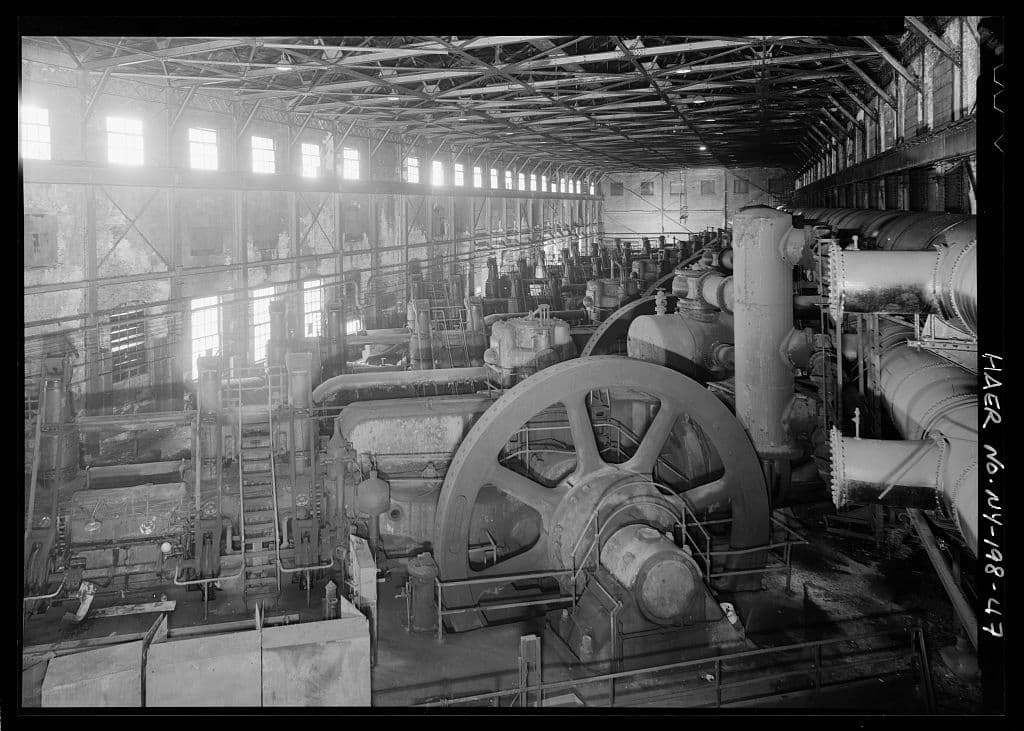
Seneca Steel began producing iron and steel on the Lackawanna waterfront in 1902. Bethlehem Steel purchased the works in 1922 and developed one of Western New York's defining industrial landscapes: an integrated complex of blast furnaces, steelmaking furnaces, coke ovens and by-product operations, rolling and finishing mills, rail systems, water infrastructure, and waste-management areas.
That scale carried a human cost. A Bethlehem Steel accident tally preserved by the Steel Plant Museum of Western New York records 171 worker deaths from 1924 through 1956 alone. The figure covers fatal accidents of many kinds—not explosions alone—and does not represent the plant's complete operating history.
The plant also changed the shoreline itself. DEC and EPA records describe roughly 440 acres of manmade land created with iron- and steelmaking slag and other manufacturing waste; a DEC community plan says the fill extended the shoreline as much as one-half mile and exceeded 90 feet in thickness in some places.
Today the former works is not one cleanup parcel. State hazardous-waste Site 915009, federal RCRA corrective-action areas, Brownfield Cleanup Program parcels, renewable-energy and industrial redevelopment areas, and shoreline habitat projects overlap the larger industrial footprint but carry different boundaries and obligations.
Early Atomic Energy Commission: The 1949–1952 uranium-rolling program used the 10-inch continuous bar mill; it is distinct from the wider steelworks chemical and slag cleanup.
Labor and loss
The work had a human cost
The Lackawanna works was remembered not only through production totals, furnaces, and acres of industrial land, but through the people injured and killed while making steel. Buffalo Toronto Public Media reports that a Bethlehem Steel accident tally now held by the Steel Plant Museum of Western New York records 171 worker deaths in the 32 years from 1924 through 1956 alone.
February 1904 · predecessor works
Three men killed after blast-furnace gas ignited
A contemporary newspaper account reported that George Reynolds, Michael Smith, and Frank Prenatt were killed and several others injured in an explosion near a gas reservoir at the Lackawanna Steel works. This occurred at the same industrial complex, but 18 years before Bethlehem Steel acquired it in 1922.
1924–1956 · Bethlehem era
The tally is broader than explosions
The preserved total of 171 deaths covers fatal workplace accidents of many kinds. It should not be presented as an explosion count. Blast furnaces, coke ovens, molten metal, rail equipment, cranes, conveyors, falls, and machinery all formed part of the plant's occupational-risk landscape.
September 20, 1984 · federal record
A coke-oven worker was crushed and killed
OSHA's Buffalo Area Office recorded a fatality while workers were troubleshooting a malfunctioning coke-oven door machine. The record is included because it shows that the human toll extended beyond spectacular disasters into maintenance and routine plant operations.
Bethlehem Steel's uranium program
The 1949–1952 AEC program used the 10-inch mill to roll uranium. Federal records document worker exposure and residue shipments to LOOW; later reviews found no significant residual contamination requiring FUSRAP cleanup.
Read the uranium operation, worker record and material pathways →Historical aerial evidence · first release
The steel works, slag-built shoreline, and post-industrial landscape
These photographs make the physical scale of the Lackawanna works visible. The 1926 and 1951 archive frames provide period context but cover different extents and are not precisely aligned. The three later state orthophotos use one shared geographic window, allowing a closer comparison of the property after primary steelmaking ended.
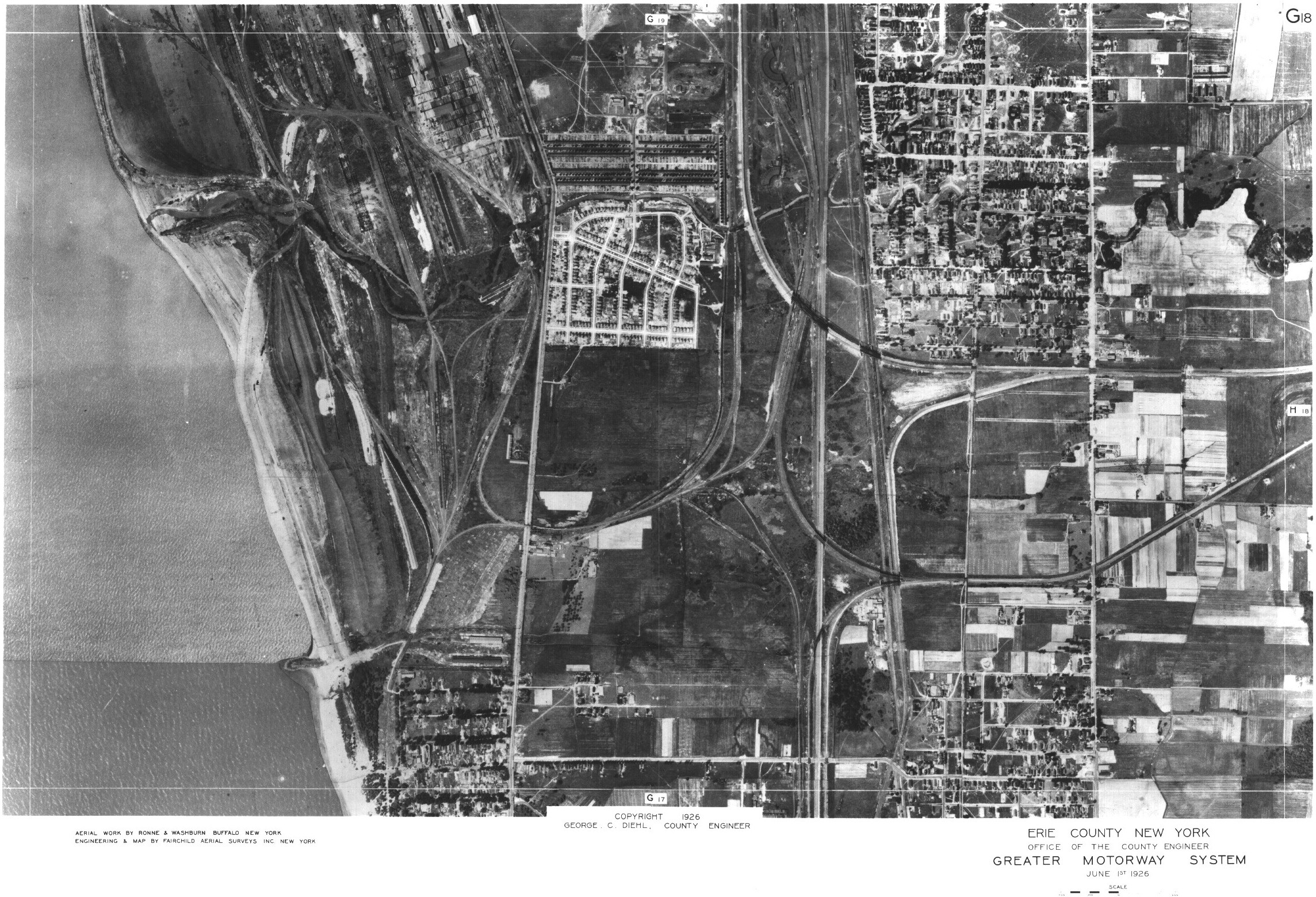
The county plate shows the early industrial waterfront and adjoining community shortly after Bethlehem Steel acquired the works. Plate seams and historical markings are part of the archive image.
Erie County plate G18 ↗Choose a year. On touch screens, swipe the image to move through time.
News record
Major news events
Coverage selected here marks a turning point in public awareness, policy, enforcement, employment, or cleanup. Links open at the original publisher or archive; WNYAtlas does not reproduce restricted articles or images.
Bethlehem announces a major Lackawanna shutdown
The six-week shutdown affected 1,650 workers while thousands more were already laid off, signaling that the plant's long contraction was entering its decisive final stage.
United Press International archive ↗Primary steelmaking ends after 83 years
Contemporary coverage described the furnaces going cold and approximately 7,300 jobs disappearing, an economic and cultural turning point for Lackawanna and the Buffalo region.
United Press International archive ↗Chemical guide
Chemicals named in this record
These links explain potential hazards and exposure pathways. A chemical named in a record does not establish that anyone was exposed or harmed.
Chronology
Timeline
- February 1904
At the predecessor Lackawanna Steel works, blast-furnace gas ignited near a reservoir, killing George Reynolds, Michael Smith, and Frank Prenatt and injuring several other workers. Bethlehem did not acquire the plant until 1922.
- 1902–1922
Seneca Steel began iron and steel production in 1902; Bethlehem Steel purchased the Lackawanna works in 1922.
- 1922–1983
Bethlehem expanded and operated the integrated works. Ironmaking and steelmaking ended by the close of 1983, although other operations continued.
- 1924–1956
A preserved Bethlehem Steel accident tally records 171 worker deaths at the Lackawanna plant during these 32 years. The total includes multiple kinds of fatal workplace accidents, not only explosions.
- 1949–1952
AEC uranium work used the 10-inch mill. Its occupational exposure and federal material-handling history are documented separately from the wider steelworks cleanup.
- September 20, 1984
OSHA recorded a fatal coke-oven accident in which a worker was crushed between a coke-oven door and its door machine while a malfunction was being investigated.
- 1990–2005
An EPA corrective-action order began the facility-wide investigation in 1990. The final investigation report was submitted in January 2005 after work on more than 100 solid-waste management units and other areas of concern.
- 1990s–2009
Most steelmaking structures west of Route 5 were demolished in the mid-1990s. Coke production ended in September 2001, Bethlehem entered bankruptcy that year, and rolling and galvanizing operations elsewhere on the property continued until 2009.
- 2009
Approximately 40,000 cubic yards of affected sediment were removed from lower Smokes Creek.
- Present
Cleanup, monitoring, demolition, habitat restoration, renewable-energy use, and industrial redevelopment proceed across separate portions of the former complex.
Environmental record
Documented impacts
- Approximately 440 acres of the western property consist of manmade land formed with iron- and steelmaking slag and other plant waste.
- The HWM-2 landfill was documented as containing coke-making and primary-metals wastes.
- DEC describes roughly 40 contaminated areas identified in soil, industrial fill, groundwater, sediment, and surface water. Principal cleanup contaminants include arsenic, cadmium, mercury, lead, and semi-volatile organic compounds.
- The former Benzol Yard created a groundwater plume containing benzene and related compounds; coke-oven and acid-tar areas required separate source-control and groundwater remedies.
Response
Cleanup and controls
- Corrective-action work is divided into units and phases because of the site's size, operating history, and varied conditions.
- At the former Benzol Yard, a groundwater extraction and treatment system has operated since 2005 to control a plume containing benzene and related compounds.
- At the Acid Tar Pits and Coke Oven Area, current work includes containment, extraction and treatment, cap construction or improvement, and an expanded groundwater monitoring and treatment network.
- Other remedies include excavation, consolidation or containment, covers, monitoring, land-use restrictions, and habitat work. In 2009, approximately 40,000 cubic yards of affected sediment were removed from lower Smokes Creek.
- Redevelopment decisions must remain compatible with environmental easements, engineering controls, and site-management requirements.
Then and now
The site today
The former complex is not one uniform brownfield. Some areas support industrial, renewable-energy, trail, or habitat uses; others remain under active cleanup, demolition, monitoring, or site management.
DEC reports that public drinking water is not affected because the surrounding area uses a public supply. Its current exposure summary also says soil vapor is not an issue while the western property remains undeveloped or in outdoor industrial use; future enclosed development requires parcel-specific review.
Atlas connections
Connected places
These collections explain documented material, facility, waterway, ownership, or cleanup relationships. Inclusion does not imply that every place shares one contaminant source or plume.
Bethlehem Steel and Smokes Creek
The former steel complex and its watercourse are linked by documented industrial use, discharge history, cleanup, and shoreline restoration.
The Bethlehem record covers the former steelmaking property, waste areas, parcel cleanups, and redevelopment.
Watercourse and discharge corridorSmokes Creek / Bethlehem Steel Discharge CorridorSmokes Creek carries the connected waterway story while remaining distinct from the land-based facility remedies.
Outer Harbor industrial recovery landscape
Canals, filled shoreline, disposal areas, steel and iron facilities, and restored habitat form a connected Outer Harbor landscape. Each location retains its own contamination record, remedy boundary, and present-day controls.
The canal and Ship Canal Commons preserve Hanna Furnace history while containing contaminated sediment and residual upland material.
Covered shoreline brownfieldOuter Harbor GreenbeltThe Greenbelt adds a separately managed filled shoreline and public-open-space remedy.
Dredged-material site and habitatTimes Beach Confined Disposal SiteTimes Beach shows another Outer Harbor transition from disposal infrastructure to ecological value.
Landfill and steel propertyAlltift Landfill / Ramco SteelAlltift connects historic filling and steel operations to the broader South Buffalo waterfront.
Adjacent steelmaking landscapeBethlehem SteelThe former Bethlehem complex extends the heavy-industrial shoreline south into Lackawanna.
Waterway connection
See the documented waterway record
The separate waterways map explains the documented relationship among the historic waterbody, fill or sediment, and this Atlas site without crowding the regional map.
Linked research mapBethlehem Steel / Tecumseh slag shoreline →Linked research mapSteel Winds dredge-spoil and slag-fill area →