industry · Erie County
Tonawanda Coke
Town of Tonawanda
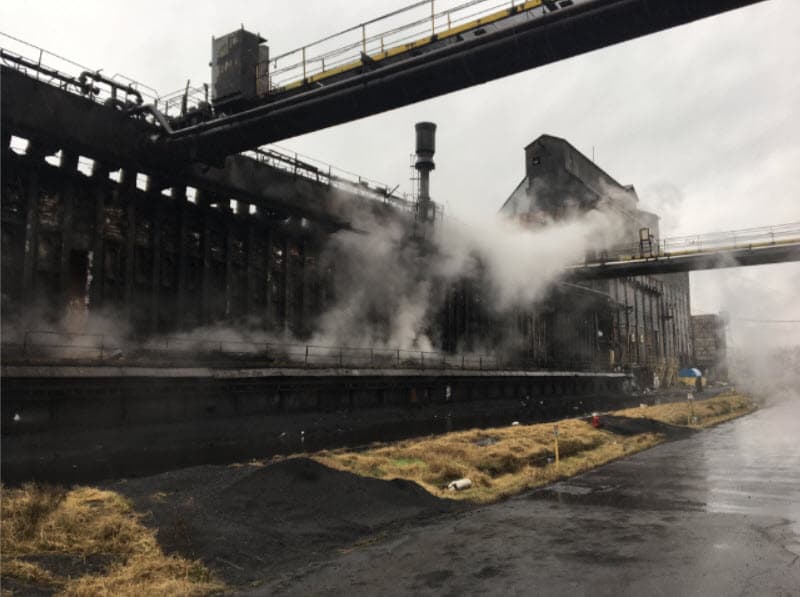
Former coke manufacturing facility documented as a major historical benzene source, where shutdown response, removal work, state cleanup, and redevelopment followed the 2018 closure.
The documented story
A century of coke making, community pressure, and cleanup
Coke manufacturing began on this River Road property in 1917. Coal was heated without air in batteries of ovens to produce coke, while gas and chemical by-products moved through a large network of process equipment. Tonawanda Coke took over the operation in 1978 and continued producing coke until October 2018.
For neighboring residents, the defining issue became the air beyond the plant fence. Community members pressed regulators over odors, soot, and pollution concerns, while government monitoring and modeling identified Tonawanda Coke as a major historical benzene source. Their organizing helped turn a long-running industrial complaint into a sustained enforcement story.
An EPA inspection in April 2009 uncovered an unreported coke-oven-gas emission source and hazardous coal-tar-sludge practices. In 2013 a federal jury convicted the company on 11 Clean Air Act counts and three hazardous-waste counts; its environmental manager was also convicted. The 2014 sentence imposed a $12.5 million penalty and $12.2 million in community-service payments directed toward health and environmental research.
When the company's 60 ovens permanently shut down in October 2018, the environmental work changed rather than ended. Federal and state teams monitored the shutdown, secured abandoned process systems, managed hazardous material, treated and disposed of more than one million gallons of waste ammonia liquor, and prepared the property for longer-term cleanup.
The 129-acre record is not one uniform cleanup area. The former main plant east of River Road entered New York's Brownfield Cleanup Program, while the Niagara River parcel known as Site 108 remained under a separate federal and state cleanup framework. Present-day claims about remedy completion or redevelopment must continue to distinguish those parcels.
Residents, enforcement, and closure
A neighborhood challenge became a federal criminal case
$24.7Mcriminal penalty and community service ordered in 2014
2009-2013
Community concern met federal inspection and trial
EPA's April 2009 inspection uncovered an unreported coke-oven-gas emission source and hazardous coal-tar sludge practices. A federal jury later convicted the company on 11 Clean Air Act counts and three hazardous-waste counts; its environmental manager was also convicted, including for obstruction of justice.
March 2014
The sentence acknowledged harm beyond a permit violation
The court imposed a $12.5 million penalty and $12.2 million in community-service payments. The Justice Department said the community money would support an epidemiological study and air-and-soil research into the facility's possible health and environmental effects.
October 2018 onward
Closure ended production, not the work
When the 60 ovens permanently shut down, EPA placed air monitors at the plant and five community locations, including an elementary school. Federal and state teams then secured the abandoned process systems, removed or treated hazardous material, and began the longer cleanup and redevelopment phase.
Historical aerial evidence · second release
A century of coke making, shutdown, and cleanup along River Road
The first two county photographs place the coke works in its wider riverfront setting, but they cover different areas and are not precisely aligned. The three later state orthophotos use one shared geographic window around the former plant and the adjoining Niagara River corridor, making the operating and post-shutdown landscapes easier to compare.
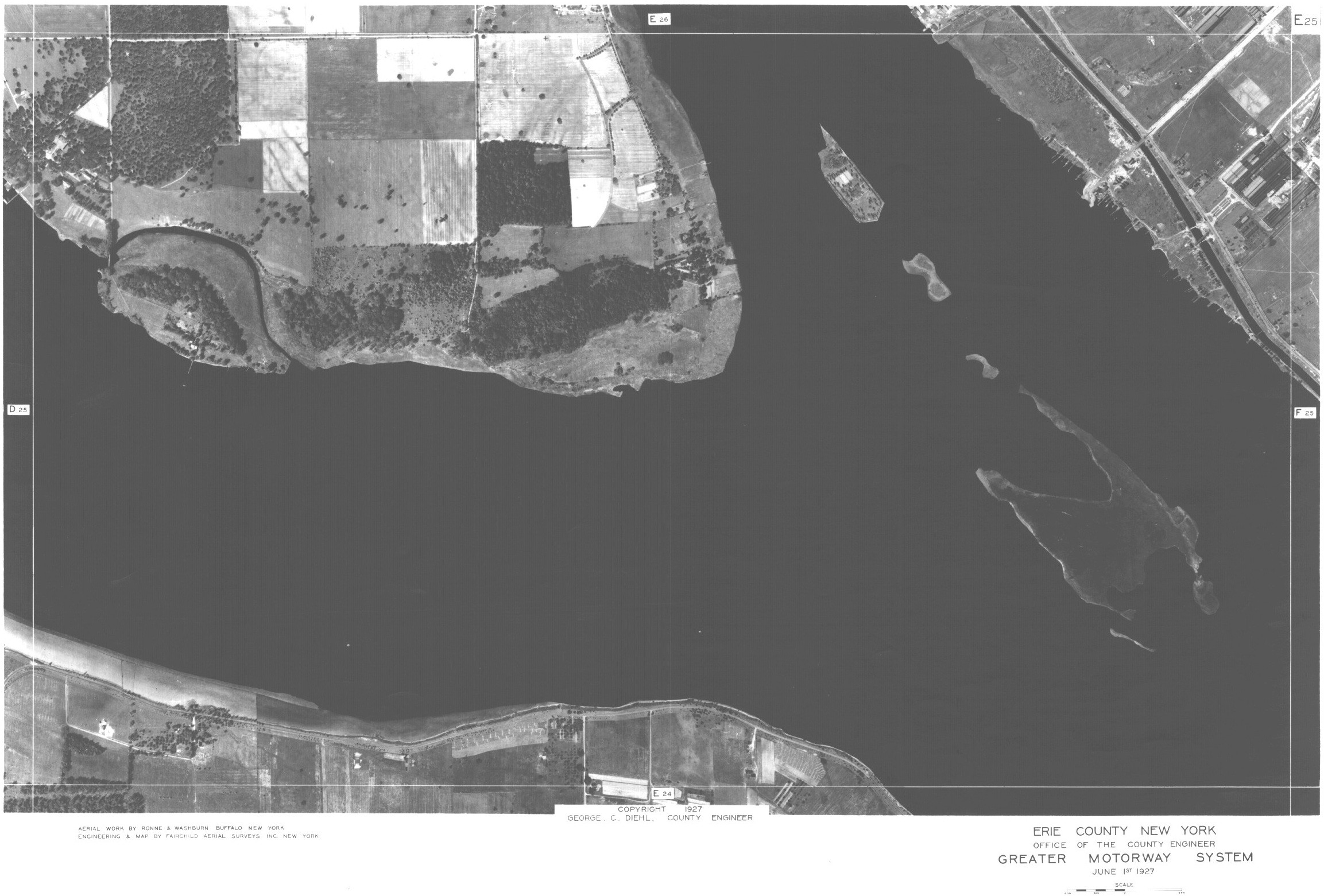
Coke manufacturing had begun on the property in 1917. This county plate supplies broad period context for the river, islands, transportation corridor, and early industrial development; it is not a surveyed site-boundary map.
Erie County plate E25 ↗Choose a year. On touch screens, swipe the image to move through time.
News record
Major news events
Coverage selected here marks a turning point in public awareness, policy, enforcement, employment, or cleanup. Links open at the original publisher or archive; WNYAtlas does not reproduce restricted articles or images.
Federal jury convicts Tonawanda Coke and its environmental manager
The verdict followed a month-long trial centered on air-pollution violations, hazardous-waste handling, and obstruction, making the case a defining regional environmental-enforcement story.
Buffalo Toronto Public Media ↗Coke production ends and emergency site work begins
The plant's closure shifted the story from emissions and prosecution to stabilization, hazardous-material removal, bankruptcy, cleanup, and redevelopment.
U.S. Environmental Protection Agency ↗Chemical guide
Chemicals named in this record
These links explain potential hazards and exposure pathways. A chemical named in a record does not establish that anyone was exposed or harmed.
Chronology
Timeline
- 1917
Coke manufacturing began on the property; Tonawanda Coke operated the facility from 1978.
- 2013–2015
Federal criminal enforcement and a judicial consent decree addressed violations of environmental law.
- October 2018
The company suspended operations and permanently shut down its 60 coke ovens under government oversight.
- 2018–2020
EPA stabilized hazardous materials, treated and disposed of more than one million gallons of waste ammonia liquor, removed contaminated soil, and oversaw other emergency work.
- 2020–present
The main plant entered New York's Brownfield Cleanup Program while Site 108 remained under a separate federal and state cleanup framework.
Environmental record
Documented impacts
- The facility's enforcement record included benzene, sulfur dioxide, particulate, and hazardous-waste concerns associated with coke production. Government monitoring and modeling identified elevated benzene and community areas with estimated excess lifetime cancer risk associated with the facility's emissions.
- Shutdown and removal work encountered contaminated soil, waste ammonia liquor, coal and coke, drums, vessels, and contaminated containment areas.
- Site 108 is a distinct state Superfund parcel west of River Road and should not be conflated with the former oven and main-plant parcel.
Response
Cleanup and controls
- EPA and DEC supervised gas purging and air monitoring during the 2018 shutdown; EPA reported that public-protective air thresholds were not exceeded during that operation.
- Emergency work removed or stabilized hazardous substances and secured facility systems after bankruptcy and closure.
- Longer-term investigation, cleanup, controls, and redevelopment review proceed under parcel-specific state brownfield and Superfund authorities.
Then and now
The site today
Coke production has ended. The property is a cleanup and redevelopment landscape whose status must be described separately for the former main plant and Site 108; redevelopment plans do not substitute for completion of applicable remedies.
Atlas connections
Connected places
These collections explain documented material, facility, waterway, ownership, or cleanup relationships. Inclusion does not imply that every place shares one contaminant source or plume.
River Road industrial and disposal corridor
Coke, plastics, steel, landfills, and material-transfer histories overlap along River Road. These records are geographically related but retain separate cleanup boundaries and responsible-party histories.
The former coke plant anchors the corridor's heavy-industrial and air-emissions history.
Plastics propertyTonawanda PlasticsThe plastics site is a separately regulated industrial property within the same River Road landscape.
Steel propertyRoblin Steel — TonawandaThis Tonawanda steel site is distinct from the former Roblin Steel cleanup in Dunkirk.
Chemical tank-truck terminalChemical Leaman Tank LinesChemical Leaman adds chemical transport, tank cleaning, and a managed environmental easement to the corridor.
Upland and sediment cleanup5565 River RoadThe 5565 River Road record connects a Class 2 upland site with separately mapped PCB-affected sediment.
Industrial landfillNiagara Mohawk–Cherry FarmCherry Farm connects the corridor's manufacturing history to documented disposal and long-term containment.
Mixed landfill and FUSRAP siteSeaway FUSRAP Site / Tonawanda North Unit 3Seaway adds municipal, industrial, and radiological material histories to the corridor.