cleanup · Erie County
Roblin Steel — Tonawanda
Town of Tonawanda
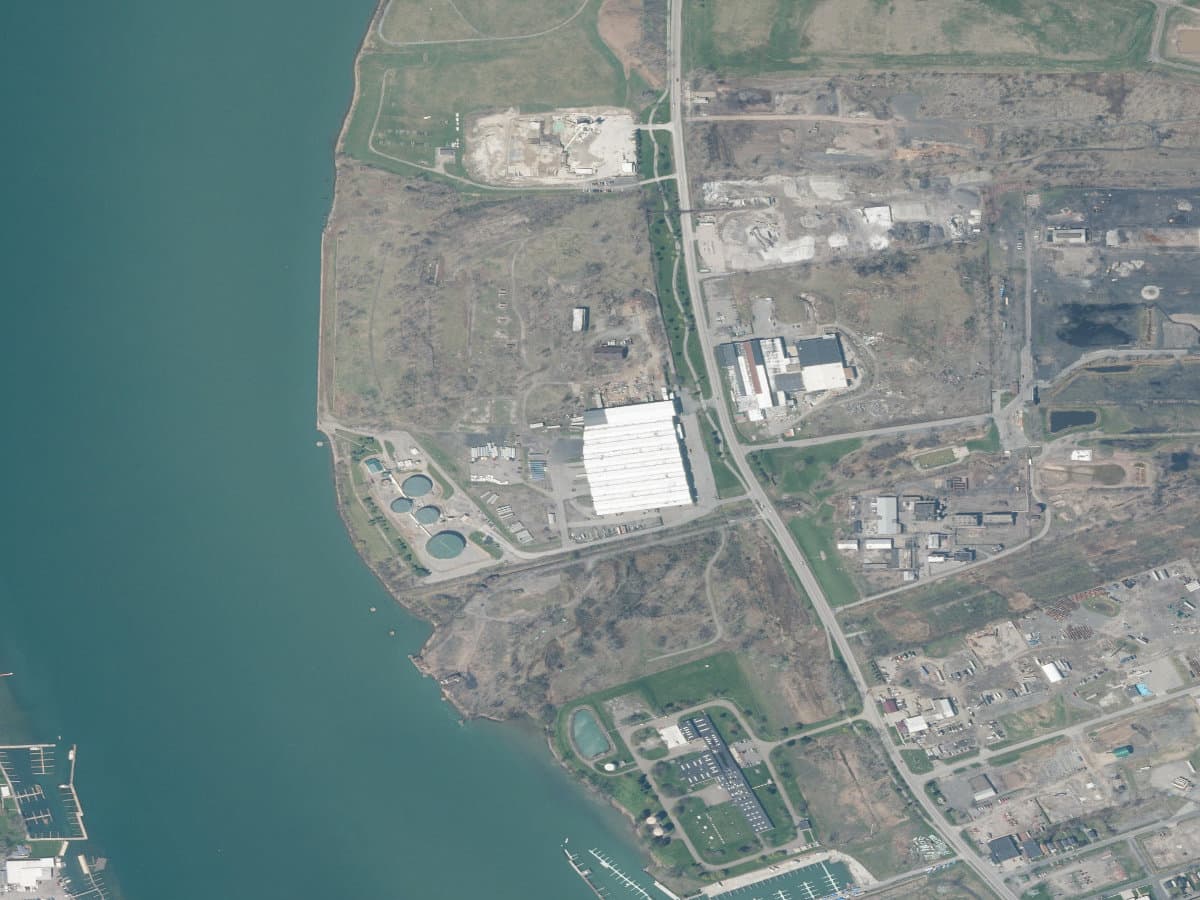
Former steel property in the River Road industrial corridor. This is a different cleanup record from Former Roblin Steel in Dunkirk and is presented as its own site to prevent two similarly named histories from being conflated.
The documented story
What happened here?
The Tonawanda Roblin Steel site is a former steel property in the River Road industrial corridor. Its name can easily be confused with Former Roblin Steel in Dunkirk, but the two properties occupy different cities, regulatory records, and industrial settings.
Steel handling and processing occurred amid neighboring coke, plastics, landfill, rail, and bulk-terminal operations. That crowded landscape makes verified parcel boundaries and source attribution especially important.
DEC assigns the Tonawanda property its own remediation identifier, Site 915056, while neighboring areas and operable units carry different identifiers and responsible-party histories. That administrative separation is useful evidence: even where industrial parcels touch or groundwater questions overlap, a finding from Tonawanda Coke, Envirotek, or another River Road property cannot automatically be assigned to Roblin Steel without the supporting site-specific record.
Chronology in context
Turning points in the public record
Steel-industry era
Roblin-related steel operations occupied the Tonawanda property.
Industrial decline and transition
Changing operations left former production, storage, and waste areas requiring investigation.
State cleanup record
DEC established Site 915056 for the defined Tonawanda property.
Present
The site's status and remedy remain distinct from both Tonawanda Coke and Roblin Steel in Dunkirk.
News record
Major news events
Coverage selected here marks a turning point in public awareness, policy, enforcement, employment, or cleanup. Links open at the original publisher or archive; WNYAtlas does not reproduce restricted articles or images.
An integrated steelworks is dismantled after shutdown
Industrial history traces blast furnaces, open-hearth steelmaking, wire and nail mills at the former Wickwire property; after closure, Roblin acquired the site and salvaged steel equipment for its Dunkirk operation.
Society for Industrial Archeology ↗Roblin and Envirotek units require boundary-by-boundary interpretation
Community mapping and state records describe overlapping operable-unit geography and separate responsible parties; the atlas therefore preserves each waste source and remedy rather than presenting a single corridor-wide plume.
Clean Air Coalition of Western New York ↗Environmental record
Documented impacts
- Former steel operations and industrial fill created soil and groundwater concerns within the defined site.
- Neighboring facilities complicate interpretation of groundwater and fill conditions.
- Similar company names do not establish a shared disposal history between Tonawanda and Dunkirk.
Response
Cleanup and controls
- State investigation and remedy decisions address the Tonawanda parcel on its own evidence.
- Source removal, cover, monitoring, or institutional controls apply only where established by the site record.
- Regional studies help test possible connections but do not replace parcel-specific sampling.
Then and now
The site today
Roblin Steel–Tonawanda is retained as its own atlas entry to prevent a historically and geographically incorrect merger with the Dunkirk site. Its place in the River Road cluster is meaningful, but each neighboring cleanup remains independently documented.
Atlas connections
Connected places
These collections explain documented material, facility, waterway, ownership, or cleanup relationships. Inclusion does not imply that every place shares one contaminant source or plume.
River Road industrial and disposal corridor
Coke, plastics, steel, landfills, and material-transfer histories overlap along River Road. These records are geographically related but retain separate cleanup boundaries and responsible-party histories.
The former coke plant anchors the corridor's heavy-industrial and air-emissions history.
Plastics propertyTonawanda PlasticsThe plastics site is a separately regulated industrial property within the same River Road landscape.
Steel propertyRoblin Steel — TonawandaThis Tonawanda steel site is distinct from the former Roblin Steel cleanup in Dunkirk.
Chemical tank-truck terminalChemical Leaman Tank LinesChemical Leaman adds chemical transport, tank cleaning, and a managed environmental easement to the corridor.
Upland and sediment cleanup5565 River RoadThe 5565 River Road record connects a Class 2 upland site with separately mapped PCB-affected sediment.
Industrial landfillNiagara Mohawk–Cherry FarmCherry Farm connects the corridor's manufacturing history to documented disposal and long-term containment.
Mixed landfill and FUSRAP siteSeaway FUSRAP Site / Tonawanda North Unit 3Seaway adds municipal, industrial, and radiological material histories to the corridor.