cleanup · Genesee County
Batavia Landfill
Town of Batavia
Thirty-five-acre municipal landfill that received heavy-metal sludges, oils, solvents, and other industrial wastes from the 1960s until 1980. Cleanup removed drums, capped remaining contaminated material, collected leachate, restored wetlands, and extended public water. EPA deleted the site from the National Priorities List in 2005. Monitoring and maintenance continue.
The documented story
What happened here?
Batavia Landfill is a 35-acre former municipal disposal site bordered on the north and east by Galloway Swamp. From the 1960s until DEC closed it as an open dump in 1980, ordinary refuse was mixed with heavy-metal sludges, oils, organic solvents, and both drummed and loose industrial waste.
The landfill's most immediate human pathway was groundwater. About 200 people lived within a mile, the underlying aquifer supplied thousands of people through private and public wells, and 1991 sampling found site-related contaminants in nearby residential wells. EPA selected and completed a public-water extension in 1995 so adjacent families no longer depended on threatened wells for drinking water.
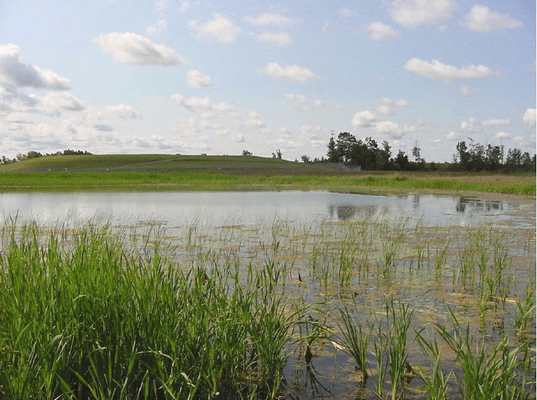
Cleanup then addressed the source itself. Crews removed 632 surface drums and associated liquids and solids, excavated additional buried drums, consolidated contaminated soil and waste beneath a multilayer cap, collected leachate for off-site disposal, and restored affected wetlands. Waste remains under the cap, which is why deletion from the Superfund list in 2005 began a long stewardship phase rather than ending the story.
A Superfund remedy changed both the landfill and nearby household infrastructure
Batavia removed drums, contained the waste mass, restored wetlands, and extended public water
35 acresapproximately, within the former landfill
1960s-1980
Municipal disposal also accepted industrial waste
Ordinary refuse entered the landfill alongside sludges, oils, solvents, and other industrial material. That mixture and the nearby groundwater setting drove federal listing and a multi-part remedy.
Superfund construction
The response extended beyond the landfill fence
Crews removed drums, capped remaining material, collected leachate, and restored affected wetland areas. Public water was extended to nearby homes, separating household supply from the groundwater pathway under investigation.
2005-present
Deletion marked construction success, not the disappearance of waste
EPA deleted the site from the National Priorities List in 2005 after the remedy was completed. Cap care, monitoring, and maintenance continue because the contained waste remains.
News record
Major news events
Coverage selected here marks a turning point in public awareness, policy, enforcement, employment, or cleanup. Links open at the original publisher or archive; WNYAtlas does not reproduce restricted articles or images.
Contaminants in nearby wells turn a landfill cleanup into a drinking-water response
After sampling found site-related contaminants in residential wells, the cleanup removed 632 surface drums and extended municipal water to adjacent households rather than asking families to keep relying on threatened private wells.
U.S. Environmental Protection Agency ↗A sixth five-year review checks the remedy two decades after Superfund deletion
EPA's newest statutory review continued the long-term question at Batavia: whether the cap, water protections, leachate controls, wetlands work, and monitoring remain protective while waste stays buried.
U.S. Environmental Protection Agency ↗Chemical guide
Chemicals named in this record
These links explain potential hazards and exposure pathways. A chemical named in a record does not establish that anyone was exposed or harmed.
Chronology
Timeline
- 1960s–1980
Municipal and industrial wastes were disposed at the landfill.
- 1983
EPA placed the landfill on the National Priorities List after state and federal investigations of waste, leachate, groundwater, and Galloway Swamp.
- 1991–1995
Responsible parties removed 632 surface drums; after contaminants were found in nearby residential wells, a municipal water line was extended to adjacent homes.
- 2000–2003
The final remedy consolidated waste beneath a multilayer cap, removed buried drums, collected leachate, and restored wetlands.
- 2005
EPA deleted the site from the National Priorities List after completing the remedy.
- December 2024
EPA completed the sixth five-year review, while annual groundwater and surface-water sampling and cap inspection continued.
Environmental record
Documented impacts
- Industrial contributors disposed of metal-bearing sludge, oils, solvents, and other wastes with municipal refuse.
- The 1991 removal handled 35.3 tons of contaminated solids, 27.1 tons of crushed drums, 1,700 gallons of decontamination water, and 55 gallons of cyanide-bearing oils.
- Leachate reached the bordering wetland, and groundwater contamination threatened residential wells—the documented pathway that prompted the water-line remedy.
Response
Cleanup and controls
- Accessible drums and highly contaminated materials were removed or consolidated.
- A multilayer cap isolates the waste mass and reduces infiltration, while leachate is collected and managed.
- Wetlands were restored, public water was extended, and a 2005 easement prohibits potable wells and buildings that could interfere with the cap or operating systems.
Then and now
The site today
Batavia Landfill is a completed and delisted Superfund cleanup, not an unrestricted former dump. EPA reports no currently unacceptable exposure pathway, but that conclusion depends on the public-water connection, intact cap, leachate management, annual water sampling, wetland care, and land-use restrictions continuing to work.
Atlas connections
Connected places
These collections explain documented material, facility, waterway, ownership, or cleanup relationships. Inclusion does not imply that every place shares one contaminant source or plume.
Genesee County industrial and disposal sites
Municipal disposal, scrap-metal processing, and railroad transport provide three different views of Genesee County's documented cleanup history.
The landfill received industrial wastes before its federal cleanup, deletion, and continuing stewardship.
Scrap and metal processingBatavia Iron and MetalThe Bank Street site adds a Class 2 industrial cleanup within the City of Batavia.
Railroad releaseLehigh Valley Railroad DerailmentThe Le Roy site shows how rail transport created a different kind of historical contamination record.
Manufactured-gas plantBatavia Former Manufactured Gas PlantThe Evans Street gasworks adds Batavia's nineteenth-century energy infrastructure and its coal-tar cleanup record.
Electrical-insulator manufacturingLapp Insulator CompanyThe large Le Roy property documents a separate history of ceramic manufacturing, chlorinated solvents and long-term groundwater management.