pfas · Niagara County
Niagara Falls Air Reserve Station PFAS Investigation
Niagara Falls
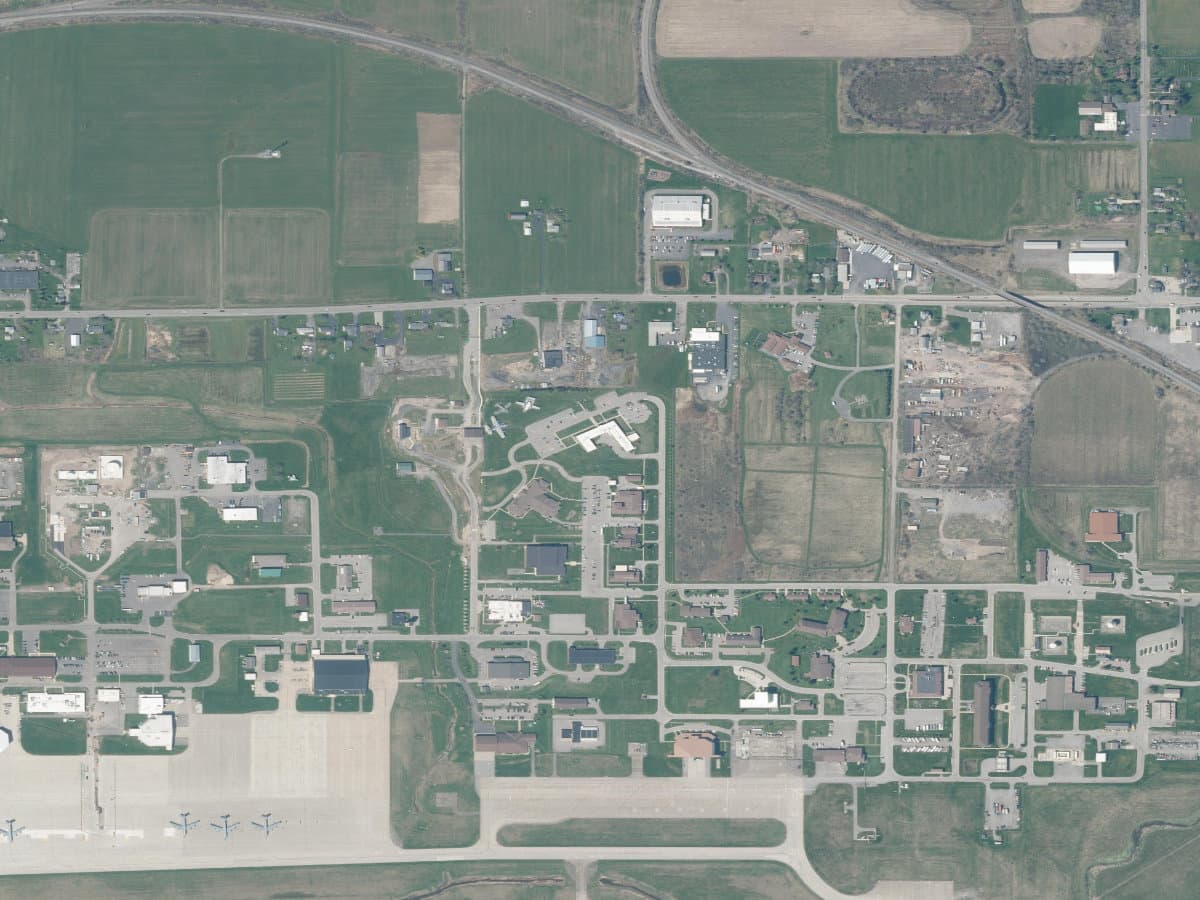
Federal and state investigations of PFAS associated with historical use and releases of aqueous film-forming firefighting foam at the air station.
The documented story
What happened here?
The Niagara Falls Air Reserve Station has a long hazardous-waste corrective-action history involving former landfills, tanks, fire-training areas, and groundwater contamination. A newer investigation layer concerns PFAS associated with historical use and release of aqueous film-forming firefighting foam.
PFAS work must be read separately from the older volatile-organic-compound remedy. EPA's RCRA page reports corrective action complete and groundwater controlled for the legacy units, while Air Force and state investigations continue to define PFAS occurrence and potential migration.
The Air Force remedial-investigation work plan organizes the PFAS study around documented or suspected AFFF release areas and the ways chemicals could move through soil, groundwater, surface water, and sediment. It also distinguishes the mostly public-water-served surrounding area from individual private wells considered during pathway review. That distinction prevents an on-base detection from being presented as evidence about every nearby drinking-water supply.
Fire protection before the PFAS reckoning
The same foam that protected aircrews became an environmental investigation
6 areasAFFF locations evaluated in the 2018 site-inspection record
Historical operations
AFFF was part of emergency readiness
Firefighters used and tested foam at training areas, hangars, spray-test locations, taxiways, and emergency scenes. The official review tied individual PFAS source areas to documented events, including a 1995 release and foam used at the Blue Angels crash site.
2016-2018
Past practice was reconstructed from records and sampling
The Air Force reviewed files, interviewed personnel, and sampled shallow soil and groundwater. PFOA or PFOS exceeded then-used screening levels at several source areas, establishing releases without treating the entire air station as one uniform plume.
Human pathway review
On-base detection did not equal a completed drinking-water exposure
The investigation concluded there was no immediate threat to known drinking-water sources within four miles because relevant wells were likely isolated and potential groundwater discharge was downstream of the drinking-water intake. Further PFAS assessment remains distinct from that initial pathway conclusion.
Atlas classification: documented use, environmental detection, agency investigation.
PFAS activity, investigation, or detection is documented in the cited site record. That documentation does not by itself establish off-site exposure or a health effect in any individual.
Compounds and evidence
Documented use
Historical training, testing, emergency response, and release areas were evaluated by the Air Force.
Detected
Medium: soil and groundwater investigation
Detected
Medium: soil and groundwater investigation
Evidence limit: Later remedial-investigation work uses a broader PFAS analyte list. The page names only compounds supported as detections by the reviewed results; APFO use has not been established.
C8 and APFO: PFOA is often called C8. APFO is the ammonium salt of PFOA, but a PFOA environmental result does not identify APFO as the original product or prove where it came from.
News record
Major news events
Coverage selected here marks a turning point in public awareness, policy, enforcement, employment, or cleanup. Links open at the original publisher or archive; WNYAtlas does not reproduce restricted articles or images.
Firefighting-foam history becomes a multi-media PFAS investigation
Federal work moved from identifying training, testing, and response areas into remedial-investigation sampling of soil, groundwater, sediment, surface water, and migration pathways.
U.S. Environmental Protection Agency ↗Private wells remain a specific question, not a regional drinking-water declaration
The investigation identified private wells within the broader downgradient study area while noting that most surrounding residents use public water. Water conclusions must follow individual sampling and supply records.
Niagara Falls Air Reserve Station remedial investigation ↗Chemical guide
Chemicals named in this record
These links explain potential hazards and exposure pathways. A chemical named in a record does not establish that anyone was exposed or harmed.
Health context
Why PFAS are a long-term concern
PFAS are a large family of manufactured chemicals. Many are highly persistent, and some can remain in the environment or build up in people and animals over time. Persistence can allow releases to move through groundwater, surface water, waste systems, food, and fish long after the original use has ended.
Human studies have found associations between increased exposure to certain PFAS and higher cholesterol, lower antibody response to some vaccines, changes in liver enzymes, pregnancy-induced hypertension and preeclampsia, small decreases in birth weight, and kidney or testicular cancer for PFOA. Evidence differs by compound, and research continues. A site detection does not show that a particular person was exposed or that PFAS caused an illness.
Chronology
Timeline
- 1942 onward
Military aviation, waste handling, fuel systems, and fire training created multiple environmental investigation areas.
- 1990s
Groundwater collection, treatment, soil heating, vapor extraction, and other corrective measures began at legacy units.
- 2016–2019
Air Force investigations evaluated historical firefighting-foam use and sampled for PFAS at potential release areas.
- Present
PFAS assessment and response decisions proceed alongside long-running RCRA groundwater and site-wide monitoring.
Environmental record
Documented impacts
- Historical AFFF use created potential PFAS source areas associated with fire-training and emergency-response activities.
- Legacy investigations also found VOCs—including benzene, trichloroethene, and vinyl chloride—in groundwater at several units.
- PFAS detections, plume boundaries, and exposure pathways require separate current data; legacy corrective-action completion does not automatically resolve PFAS.
Response
Cleanup and controls
- Legacy units use groundwater capture and treatment, site security, restricted access, and facility-wide surface-water and groundwater monitoring.
- PFAS work uses records review, source-area sampling, groundwater investigation, and risk-based evaluation under evolving federal and state standards.
- Any drinking-water response, off-site investigation, or permanent PFAS remedy must be tied to documented pathways rather than assumed from on-base detection alone.
Then and now
The site today
The air station remains active. EPA classifies the older RCRA corrective action as complete with groundwater controlled, while PFAS remains an investigation and potential-response program whose current conclusions must come from the newest Air Force and state records.
Atlas connections
Connected places
These collections explain documented material, facility, waterway, ownership, or cleanup relationships. Inclusion does not imply that every place shares one contaminant source or plume.
Western New York PFAS investigations
These records share an emerging contaminant and evolving agency investigation framework; they do not imply a common source or connected groundwater plume.
The air reserve station record follows PFAS investigation associated with federal facility operations.
Community investigationMayville PFAS SiteMayville is a separate Chautauqua County investigation with its own sources, boundaries, and response decisions.
Residential-area investigationMarine Drive Apartments East PFAS InvestigationMarine Drive represents a distinct Buffalo investigation and should not be read as physically connected to the other PFAS locations.