cleanup · Chautauqua County
C&B Dry Cleaners
Jamestown
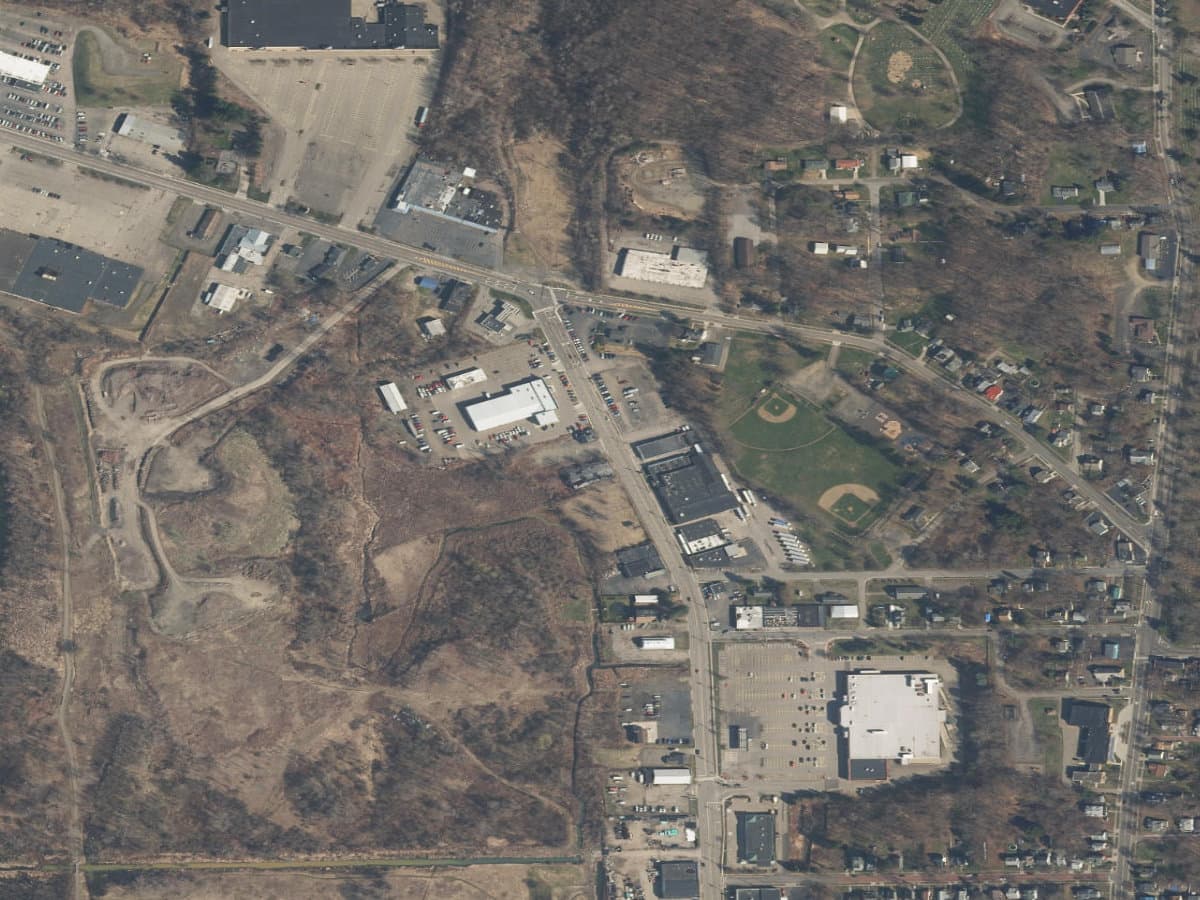
Compact former dry-cleaning property that illustrates how a small business could create a significant solvent cleanup problem. The site is managed separately from Jamestown's much larger industrial complexes.
The documented story
What happened here?
Former C&B Dry Cleaners is a compact Jamestown cleanup site whose significance comes from solvent use rather than the physical scale of the business. Dry-cleaning chemicals can enter soil through spills, floor drains, tanks, or waste handling and then migrate as vapor or dissolved groundwater contamination.
The property sits within a larger urban and industrial setting, but its regulatory record is distinct from nearby metalworking sites. That distinction is essential when discussing a solvent plume or vapor pathway.
DEC's proposed remedial plan identifies tetrachloroethene, commonly called PCE, as the principal site-related chemical. The state record separates the former dry-cleaning source area from the media through which contamination can move: soil near the former operation, groundwater beneath and beyond it, and soil vapor that may require building-specific evaluation. That pathway-based framing is more precise than treating every nearby property as equally affected.
Chronology in context
Turning points in the public record
Dry-cleaning era
A dry-cleaning business operated at the property and used chlorinated cleaning solvent.
Investigation
Environmental studies evaluated soil, groundwater, and soil-vapor pathways.
Remedial program
New York directed cleanup and controls for the defined former cleaner property.
Present
Residual conditions and any vapor or groundwater obligations remain subject to site-specific management.
News record
Major news events
Coverage selected here marks a turning point in public awareness, policy, enforcement, employment, or cleanup. Links open at the original publisher or archive; WNYAtlas does not reproduce restricted articles or images.
A compact dry-cleaning property requires a public solvent-cleanup plan
DEC's proposed plan brought the former cleaner's chlorinated-solvent source, groundwater and vapor pathways into public review, illustrating how contamination from a small business footprint can require long-term treatment and controls.
New York State Department of Environmental Conservation ↗Chemical guide
Chemicals named in this record
These links explain potential hazards and exposure pathways. A chemical named in a record does not establish that anyone was exposed or harmed.
Environmental record
Documented impacts
- Chlorinated dry-cleaning solvent is the principal concern associated with the former operation.
- Groundwater and soil vapor can carry solvent impacts beyond the original release point.
- The site record should not be merged with nearby D.C. Rollforms, Weber-Knapp, or other Jamestown industrial sources.
Response
Cleanup and controls
- Investigation delineated source, groundwater, and vapor pathways before remedy selection.
- Source removal or treatment and vapor mitigation are applied where required by the state remedy.
- Monitoring, land-use controls, groundwater restrictions, and site management protect against remaining exposure.
Then and now
The site today
The former cleaner demonstrates that a small commercial footprint can require sophisticated long-term cleanup. Present-day risk should be described from current monitoring and mitigation records, not from the historic business name alone.
Atlas connections
Connected places
These collections explain documented material, facility, waterway, ownership, or cleanup relationships. Inclusion does not imply that every place shares one contaminant source or plume.
Dry Cleaning & Chlorinated Solvents
Neighborhood businesses connect solvent use with groundwater and vapor cleanup. These are separate sites and remedies, not one shared plume.
Excavation, biological treatment and continuing management at a small residential-neighborhood site.
Pine Avenue vapor controlsTime 1-Hour CleanersBuilding and sewer work illustrates the complexity of vapor mitigation in a commercial and residential setting.
Buffalo neighborhood cleanupBestway CleanersA separate Seneca Street solvent investigation extending beyond the source parcel.
Canalside solvent cleanupStarlite Dry CleanersFormer cleaning operations left a separate soil and groundwater treatment problem.
Jamestown solvent historyC&B Dry CleanersA compact parcel with a consequential subsurface cleanup.
Separate Jamestown propertyAnderson CleanersRelated by the cleaning process, not evidence of a shared plume with C&B.
Shopping-center cleanupNorthtown Plaza / Former Dry CleanerPCE cleanup and vapor controls in a suburban commercial setting.
Southern Tier small-industry cleanups
Foundries, furniture and veneer works, machining plants, dry cleaners, and rural disposal sites show that Western New York's cleanup history extends well beyond its largest waterfront factories.
Farwell Road represents a managed hazardous-waste landfill outside the major urban industrial corridors.
Municipal landfillCarroll LandfillCarroll connects local waste disposal to wetlands, Conewango Creek, and long-term treatment.
Tool-manufacturing complexD.C. Rollforms / Proto ToolProto Tool brings electroplating, heat treatment, degreasing, and river-edge remediation into the collection.
Small solvent siteC&B Dry CleanersThe dry cleaner demonstrates how a very small parcel can create a consequential subsurface cleanup.
Coatings and solvent siteEssex / Hope SiteEssex / Hope documents a long-running coatings property with an amended remedy and a separately investigated downgradient area.
Chlorinated-solvent groundwater cleanupDowcraft — South Dow StreetDowcraft connects former manufacturing and vapor degreasing to continuing groundwater treatment and monitoring.
Municipal and industrial-waste landfillJamestown City LandfillThe former city landfill preserves Jamestown's documented municipal and industrial-disposal history while clearly stating its current Class 3 status.
Bronze foundry cleanupEllison Bronze CompanyEllison Bronze adds metal-bearing foundry material, stabilization, containment, and continuing management to the Falconer record.
Petroleum and veneer worksBush IndustriesBush Industries layers early petroleum use with later wood-products manufacturing.
Foundry and machine shopRandolph FoundryRandolph adds discarded foundry sand, drums, and asbestos to the southern-tier industrial record.
Die-casting and machining plantLexington MachiningLexington documents solvent use and long-term groundwater management at a smaller manufacturing plant.
Jamestown chlorinated-solvent cleanup sites
Dry cleaning, tool production, and other industrial degreasing created separate chlorinated-solvent cleanups around Jamestown. This collection compares processes and remedies; it does not assert one shared plume.
Anderson Cleaners is a Class 2 soil and groundwater cleanup at Hunt Road.
Separate dry-cleaning cleanupC&B Dry CleanersC&B is a separate compact dry-cleaning site with its own investigated area and controls.
Tool-manufacturing cleanupD.C. Rollforms / Proto ToolProto Tool used vapor degreasing alongside forging, plating, machining, and heat-treatment processes.
Scrap-metal degreasing cleanupKeywell / Vac-AirThe nearby Frewsburg property used TCE in high-grade scrap-metal processing and has a separate managed groundwater remedy.