industry · Erie County
Huntley Generating Station
Town of Tonawanda
Coal-fired Niagara River power station retired in 2016, with a separately managed industrial fly-ash landfill and a history extending to the River Station era.
The documented story
What happened here?
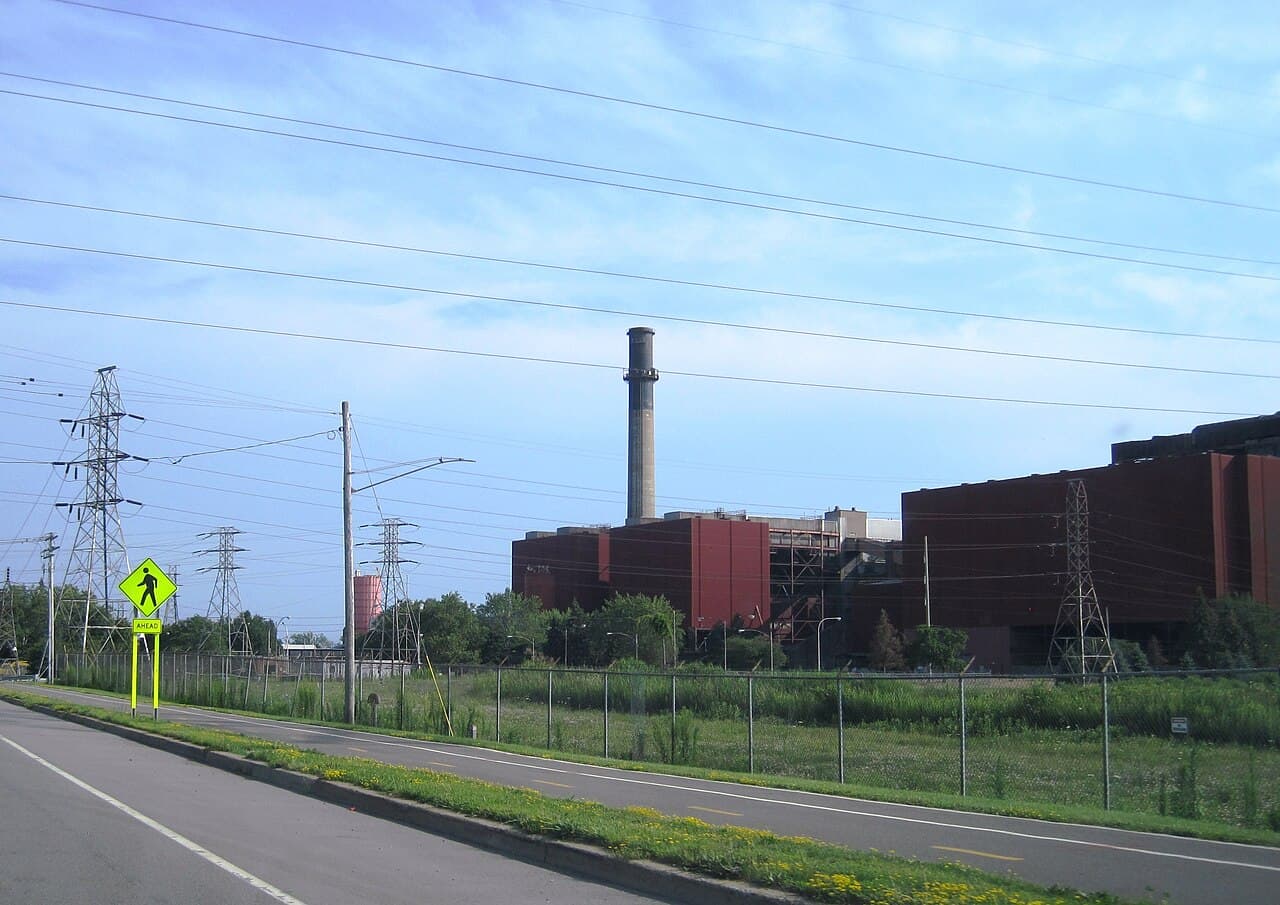
Huntley was a coal-fired generating station on the Niagara River in the Town of Tonawanda. Its environmental footprint included the power plant, coal handling, wastewater and settling ponds, and a separately managed industrial landfill used for coal-combustion residuals.
Coal ash is the mineral residue left after coal is burned. At Huntley it was managed through ponds, dewatering systems, and landfill disposal; those units have their own inspection, closure, monitoring, and permit records distinct from the retired generating buildings.
A power-plant closure reached far beyond the plant gate
Huntley became a national case study in community energy transition
2016year coal generation ended at Huntley
1916-2016
A century of generation made the station part of Tonawanda's civic economy
The Niagara River plant expanded through several generations of equipment and at one point ranked among the world's largest coal-fired stations. Its payroll, union jobs, purchases, and property payments tied an industrial facility to household incomes and public services.
Before closure
The community organized before the last unit stopped
Labor, environmental, municipal, and school stakeholders formed an unusual coalition to plan for falling employment and tax revenue. That preparation helped secure temporary state support for municipalities and school districts affected by power-plant closures.
After March 2016
Closing the smokestacks did not settle the property's future
Plant workers faced retirement or transition, local government confronted a reduced tax base, and the waterfront awaited reuse. Coal-combustion residual units, wastewater infrastructure, demolition, ownership, and redevelopment remain separate questions from the regional emissions reductions achieved by retirement.
Chronology
Timeline
- River Station era
Electric generation developed on the Niagara River property and later expanded into the Huntley coal-fired station.
- 1970s–1980s
Multiple coal-combustion residual ponds and equalization units were commissioned or modified.
- 2011
EPA's national coal-ash initiative evaluated the structural condition and hazard potential of Huntley's impoundments.
- 2016
The coal-fired generating station retired.
- Present
The former plant and the industrial ash landfill proceed through separate closure, monitoring, property-management, and redevelopment processes.
Environmental record
Documented impacts
- Coal combustion produced fly ash and bottom ash requiring pond or landfill management.
- EPA's impoundment assessment found that failure of several pond embankments could release residuals toward the Niagara River, a hazard classification rather than a finding that failure had occurred.
- Groundwater, surface-water, landfill, and pond conditions must be evaluated under the records governing each unit.
Response
Cleanup and controls
- Impoundment and landfill controls include embankment inspection, water management, cover or closure work, groundwater monitoring, and annual reporting.
- The industrial landfill remains subject to New York solid-waste requirements after power generation ceased.
- Building demolition or redevelopment does not remove the continuing obligations attached to ash-management areas.
Then and now
The site today
Huntley no longer burns coal, but retirement is not the same as environmental closure. The former generating property, ash ponds, and industrial landfill require separate status descriptions as monitoring, closure, and reuse decisions continue.