radiological · Niagara County
Guterl Specialty Steel / Former Simonds Saw and Steel
Lockport
Former specialty-steel complex where Atomic Energy Commission work left uranium and thorium impacts in buildings, soil, and groundwater; federal remediation is active.
The documented story
What happened here?
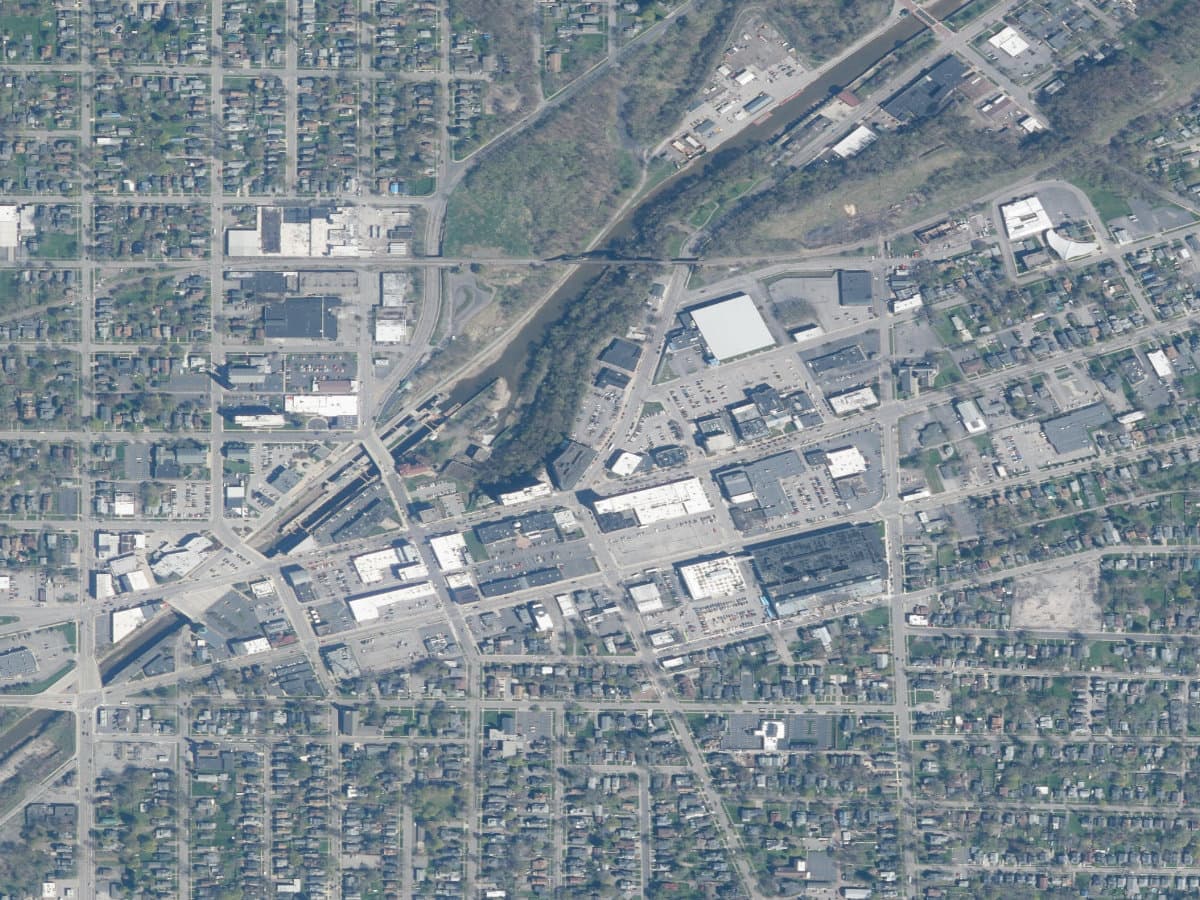
The former Simonds Saw and Steel facility in Lockport performed foundry and rolling-mill work for the Atomic Energy Commission from 1948 through 1956. USACE reports that the plant processed more than 25 million pounds of uranium metal and more than 30,000 pounds of thorium metal.
Later owners included Wallace and Murray and Guterl Specialty Steel. Federal investigation identified thorium-232 and uranium in buildings and soil and uranium in groundwater, leading USACE to select a comprehensive dismantlement, excavation, and groundwater-treatment remedy.
Ownership boundaries are central to understanding the federal project. USACE reports that Allegheny International acquired most of the larger steel complex in 1984 but not the areas used for AEC work. FUSRAP therefore addresses defined former federal-production areas within a broader industrial property. The 2024 Record of Decision completed remedy selection; it did not mean that building dismantlement, soil removal, groundwater recovery, and off-site disposal had already been carried out.
Specialty-steel workers entered the atomic supply chain
Guterl and Simonds workers became part of a federal radiation record
1948-1957first principal worker period included in the federal Special Exposure Cohort
1948-1950s
A commercial steel plant performed atomic-energy work
Simonds Saw and Steel heated, rolled, and handled uranium and thorium materials for the Atomic Energy Commission. Atomic work occurred within a larger industrial plant whose equipment and buildings also supported ordinary specialty-steel production.
Later worker review
Incomplete exposure reconstruction created a compensation pathway
NIOSH evaluated historical operations and defined classes of qualifying employees for the Special Exposure Cohort. Covered workers or survivors must still meet federal employment, duration, and specified-cancer requirements.
Cleanup era
Residual material remained after the atomic contracts ended
Surveys identified uranium and thorium contamination in former process areas, equipment, soil, and groundwater. The Army Corps selected a FUSRAP remedy for defined areas while the broader industrial property's non-radiological conditions remain governed through their applicable programs.
Early Atomic Energy Commission: uranium rolling and specialty-metal work
Chemical guide
Chemicals named in this record
These links explain potential hazards and exposure pathways. A chemical named in a record does not establish that anyone was exposed or harmed.
Chronology
Timeline
- 1948–1956
Simonds conducted AEC-related foundry and rolling operations using uranium and thorium metals.
- Post-AEC ownership
The complex passed through later steel-company owners while the former federal work areas remained distinct.
- 2021
USACE presented the proposed site-wide cleanup plan for public review.
- September 2024
USACE published the final Record of Decision for the 70-acre FUSRAP site, selecting building dismantlement, affected-soil removal, and groundwater-plume recovery and treatment.
Environmental record
Documented impacts
- Thorium-232 and uranium contamination is present in former process buildings and soil.
- Uranium contamination affects groundwater beneath the site.
- The scale of AEC processing—millions of pounds of uranium—makes this one of the region's most substantial early atomic-energy production sites.
Response
Cleanup and controls
- AEC-related buildings are to be dismantled and disposed of at an appropriately permitted off-site facility.
- Affected soil will be completely removed to the groundwater-protection cleanup goal and disposed of off site.
- Extraction wells and an on-site rubblized trench will recover the uranium plume for ex situ treatment, with monitoring of plume reduction.
Then and now
The site today
Guterl is an active FUSRAP remediation project with a selected final remedy. The federal decision finds that the remedy will be protective when implemented; that statement should not be confused with cleanup already being complete.
Radiological-map connection
Place this site in the wider material history
The separate radiological investigation map distinguishes producers, processors, storage, the 100 historical survey records, federal remediation, and current assessment coverage.
Linked research mapOpen the radiological investigation →