cleanup · Cattaraugus County
Signore
Ellicottville
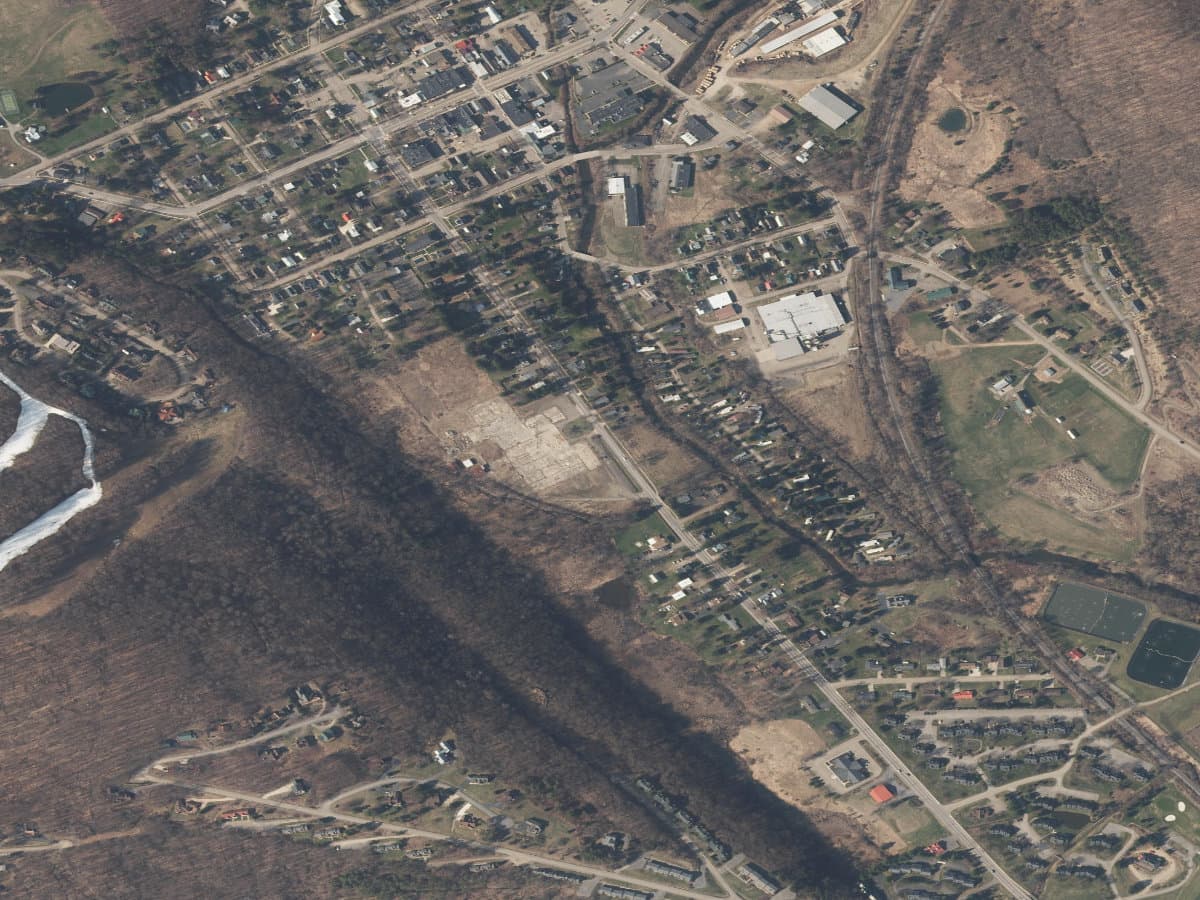
Former manufacturing property tracked through New York's brownfield program. The eight-acre site adds a smaller southern-tier industrial cleanup to an atlas otherwise dominated by Buffalo and Niagara Falls.
The documented story
What happened here?
The approximately eight-acre property at 55-57 Jefferson Street housed Signore Tool and Die until operations ceased around 2006 and the facility was abandoned. A redevelopment owner acquired it in 2008 and entered New York's Brownfield Cleanup Program in 2011.
Investigation addressed petroleum source areas, chlorinated-solvent groundwater and possible soil-vapor migration. The record is especially important because it includes an interceptor well and town well as monitored drinking-water protections rather than assuming that a factory-boundary cleanup alone resolved every pathway.
The 2015 proposed-cleanup record describes a staged response rather than one single construction event. Underground tanks and petroleum-affected soil had already been removed, and off-site vapor work had been completed before the state proposed the final Track 2 remedy. The later approach combined restricted-use soil cleanup, a maintained cover, excavation rules, and continuing monitoring, allowing reuse without presenting the property as if every residual condition had been removed.
Chronology in context
Turning points in the public record
Tool-and-die era-2006
Signore Tool and Die operated at the Jefferson Street plant before ceasing operations and abandoning the facility.
2008-2011
A redevelopment owner acquired the property and entered it into the Brownfield Cleanup Program.
Early cleanup
Underground storage tanks and associated petroleum-affected soil were removed, and an off-site soil-vapor investigation was completed.
2015
DEC presented a proposed remedy for public comment.
Long-term phase
Track 2 cleanup, cover and site-management requirements govern residual shallow soil and future excavation.
News record
Major news events
Coverage selected here marks a turning point in public awareness, policy, enforcement, employment, or cleanup. Links open at the original publisher or archive; WNYAtlas does not reproduce restricted articles or images.
An abandoned tool-and-die plant becomes an eight-acre brownfield cleanup
After Signore Tool and Die ceased operations, a new owner removed underground tanks and petroleum soil, investigated off-site vapor and advanced a state-reviewed remedy; monitoring of the interceptor and town wells was reported non-detect or below drinking-water standards.
New York State Department of Environmental Conservation ↗Environmental record
Documented impacts
- Petroleum-affected soil was associated with former underground tanks and required source removal.
- Chlorinated contaminants required groundwater, interceptor-well, town-well and soil-vapor evaluation.
- The 2015 public record reported long-term results at the interceptor and town wells as non-detect or below state drinking-water standards; that finding should be updated from current monitoring rather than treated as permanent.
Response
Cleanup and controls
- Underground tanks and petroleum-affected soil were removed as early source-control work.
- The completed Track 2 remedy allows restricted use while shallow soil remaining above unrestricted objectives is governed by cover, excavation procedures and site management.
- Groundwater and vapor monitoring remain pathway-specific safeguards rather than evidence of current exposure.
Then and now
The site today
Former Signore is a controlled Track 2 brownfield property. Its completed remedy and monitored water-supply protections should be described together: cleanup reduced and controlled sources, while long-term sampling verifies continued protectiveness.