waterway · Erie County
Buffalo Harbor CDF No. 4
Buffalo
A 107-acre Outer Harbor confined disposal facility constructed in 1977 beside the former Bethlehem Steel property. It receives dredged material from Buffalo Harbor, the Buffalo River, Black Rock Channel, and Tonawanda Harbor, but is distinct from Bethlehem’s HWM-2 industrial landfill and the steel plant’s slag-fill area.
The documented story
What happened here?
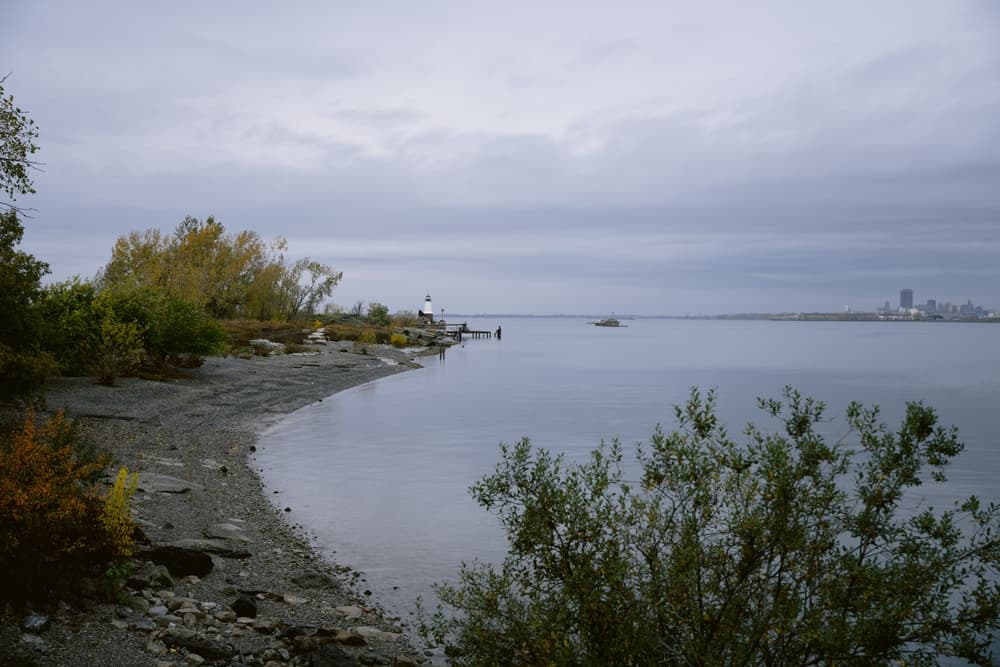
Buffalo Harbor Confined Disposal Facility No. 4 is a 107-acre in-lake containment facility attached to land at the Outer Harbor's south end. The U.S. Army Corps of Engineers built it in 1977 to receive dredged material from federal navigation projects.
Its location beside the former Bethlehem Steel property makes it easy to confuse with the steel plant's slag fill or HWM-2 waste unit. CDF No. 4 is a separate Erie County-owned, federally operated navigation facility with its own acceptance, capacity, and containment record.
Navigation maintenance created a new engineered shoreline landscape
CDF No. 4 stores the sediment removed to keep Western New York harbors navigable
107 acresengineered confined disposal facility constructed in 1977
1977
A containment facility became part of harbor infrastructure
The Army Corps constructed CDF No. 4 beside the former Bethlehem Steel property to receive sediment removed during federal navigation dredging. Dikes and controlled placement separated that material from open-water disposal.
Operating history
Four navigation areas feed one receiving landscape
Material has arrived from Buffalo Harbor, the Buffalo River, Black Rock Channel, and Tonawanda Harbor. That service area explains why the facility's history reaches beyond the immediately adjacent Outer Harbor shoreline.
Present dredging
Routine maintenance links river history to the modern economy
Periodic dredging keeps commercial and recreational navigation channels at authorized depth, with suitable project sediment placed in the confined facility. Capacity, placement areas, and environmental controls shape each campaign.
News record
Major news events
Coverage selected here marks a turning point in public awareness, policy, enforcement, employment, or cleanup. Links open at the original publisher or archive; WNYAtlas does not reproduce restricted articles or images.
Army Corps inspection focuses on wave damage and dike repairs
The operating disposal facility is exposed to deep-water wave action, making structural inspection and repair part of the containment story as well as the navigation program.
U.S. Army Corps of Engineers, Buffalo District ↗Chronology
Timeline
- 1977
The confined disposal facility was constructed under federal navigation authority.
- Operating era
The facility received material dredged to maintain Buffalo Harbor, Black Rock Channel, and Tonawanda Harbor.
- 2023 fact sheet
USACE reported a total capacity of 6.9 million cubic yards and typical placement of about 140,000 cubic yards every two years.
- 2023–present
Army Corps inspections documented wave-driven repair needs along the exterior dike while the facility remained reserved primarily for authorized navigation projects.
Environmental record
Documented impacts
- Navigation dredging removes accumulated sediment from channels and requires controlled placement when material is unsuitable for open-water disposal or beneficial use.
- The CDF permanently changes the shoreline and contains dredged sediment within perimeter structures.
- Its waste stream and legal identity differ from Bethlehem Steel's industrial landfills and slag-created land.
Response
Cleanup and controls
- Perimeter containment isolates placed dredged material from the surrounding lake.
- USACE controls material acceptance, placement, capacity, operation, and maintenance; non-federal use requires an environmental and navigation-capacity determination.
- Monitoring and structural maintenance support continued containment and navigation service.
Then and now
The site today
CDF No. 4 remains an operating dredged-material facility with substantial reported capacity. It should be mapped as navigation infrastructure—not relabeled as the Bethlehem Steel landfill or used to imply that all Buffalo River dredging went onto the steel property.